OUR CHURCH

Image Through the years St. Paul Baptist Church has been blessed with the leadership of many spirit-filled ministers who were devoted to their charge of serving God’s people and giving inspired wisdom and service to the church and community. Because of their outstanding guidance and dedicated effort, St. Paul has become a magnificent beacon on the path to salvation.


The founding pastor Reverend T.T. Tucker was a man of great vision and insight who worked unceasingly to build a church that would embrace the community, teach the word, and lead the congregation to the Lord. Reverend Tucker held the first official meeting of the church in 1902 at the home of Mrs. Anna McGuinn who resided in the city of Montclair. He served as pastor for three years.

Image Reverend William Perry succeeded Reverend Tucker and was instrumental in establishing a thriving Sunday school which greatly increased the church’s membership. Under his guidance the Baptist Young People's Union, later to be called the Baptist Training Union, was organized and grew to become the largest BTU in the state of New Jersey. During Reverend Perry’s tenure the planning for the first church building was begun and a deposit of sixty-five dollars was paid for ground at 15-17 Hartley Street in Montclair. However, Pastor Perry did not remain to see the groundbreaking ceremony for the new church, and after two years of service he resigned and a search for a new minister began.

In 1907 the church called into service Reverend E.E. Jackson who continued work on construction of the new church and made several changes with the advice of the architect. The work was completed by Easter Sunday of 1908 and a dedication service was held to commemorate the event. Pastor Jackson resigned the pastorate in 1912. 
 
A search for a new pastor brought H.H. Warring to the church. Pastor Warring accepted the challenge of paying off the church mortgage. He chaired a committee that was responsible for organizing and hosting the first Industrial Fair. The goals of this event were to raise money to payoff the mortgage, demonstrate for the Montclair community that the members of St. Paul had the knowledge and ability to put together an industrial arts fair, and most importantly, to inspire the youth of the church and the community. The fair, a great success, was held on October 12, 1920. Pastor Warring led the church for another year.Image

Reverend R.V. Peyton gained the pastorate in 1922 and was instrumental in enlarging and building a stable congregation. Under his guidance members of his board bought land and built a parsonage with a two car garage. Due to his dynamic personality, people traveled from great distances to attend the services which led to enlarging and renovating the church. The membership grew from five hundred to one thousand. This powerful leader and speaker remained with the church until he was called to the pastorate of Mt. Morriah Church in Richmond, Virginia. 
 
Reverend A.O. Bell was called to serve and in January of 1929 he took over the pastorate of the church. His warm and welcoming personality drew many new members to the church and he embraced them all in an atmosphere of love and acceptance. During his tenure Reverend Bell, along with his wife Augusta, established several clubs and auxiliaries that aided the church. He often held impromptu rallies that helped enable the church to raise money to pay off the mortgage.

Reverend and Mrs. Bell were thoroughly involved in church issues, concerns, and activities. Their influence reached throughout the community and the state. Many of the ideas and activities initiated by the Bells are still in practice today. During Reverend Bell’s administration the church’s Social Work Department was formed, and other clubs were organized to carry out specific activities. The Lily of the Valley Club supplied the church with fresh flowers, the church bulletin was established, and St. Paul grew to have largest Sunday school in town. Joint picnics were held with other churches, Communion services were organized to be taken on the first Sunday of each month, the Youth Council was formed, Vacation Bible School was established, and Sunday school teachers received professional teacher training. 
 
Image Before the end of his tenure Reverend Bell guided the establishment of a building fund for a new church, however he did not remain to see it through and resigned to become pastor of the North Oakland Baptist Church in Oakland, California.

From 1937 to 1966, Reverend J.H. Billups was the longest serving minister in St. Paul history. His focus included improving working relationships between the many clubs and auxiliaries so that a spirit of togetherness would prevail. Pastor Billups encouraged new members to take active roles in church organizations. He believed that the church would maintain sustainable growth if all members participated in church affairs. The Gospel Chorus was formed during his tenure, the Pastor’s Aid was reorganized, and the Social Work Department was revived.
 
Reverend Billups believed in community outreach and developed a friendly and supportive relationship with other churches in the Montclair community. He also became an active member of the local YWCA and YMCA, the NAACP, the Interracial Committee, and the Minister's Conference of Montclair in his effort to improve the status and living conditions of all people.

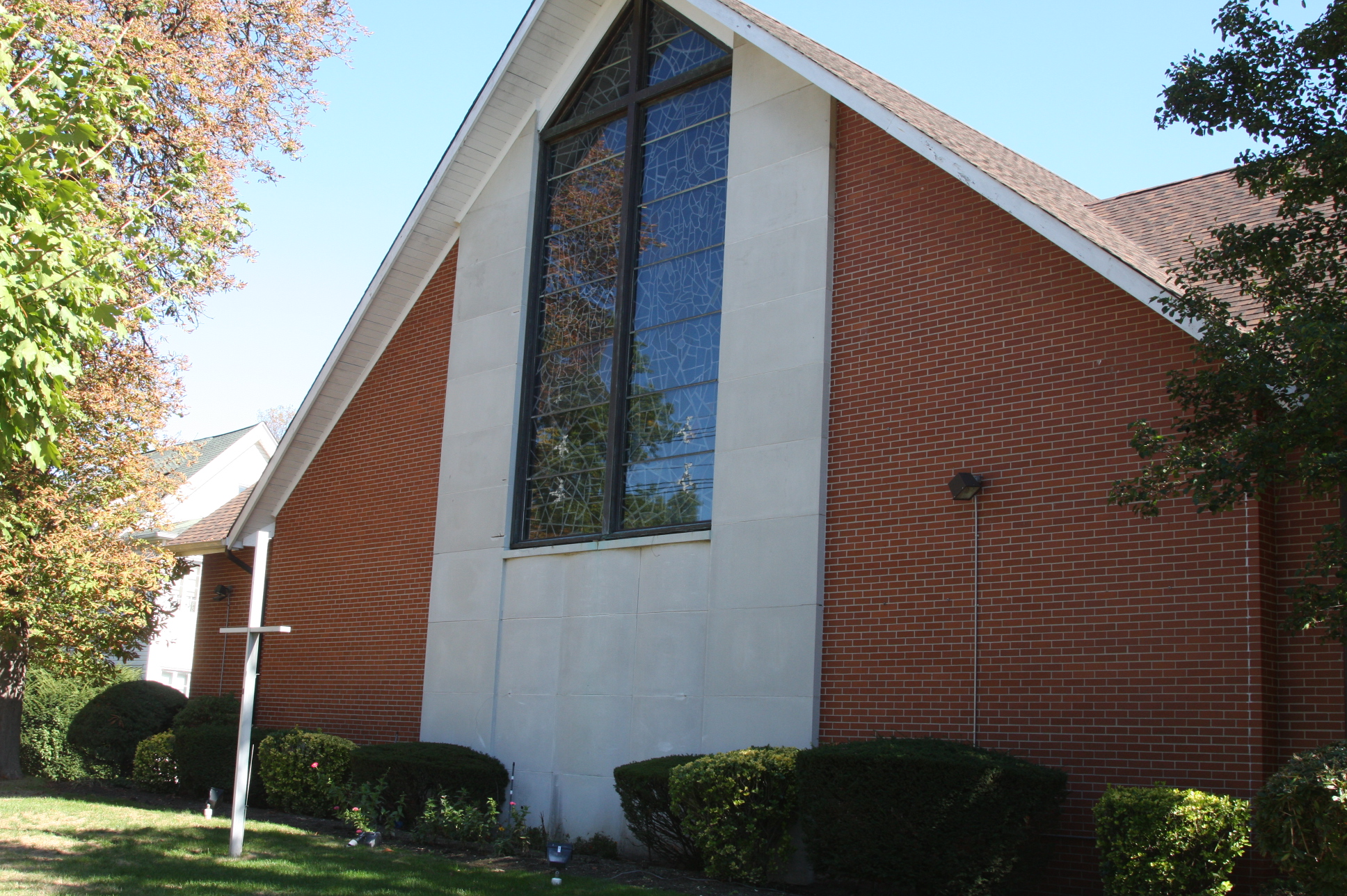
It was during his tenure that a wonderful new organ was purchased, and in October of 1957 ground was broken for the new St. Paul Baptist Church at 119 Elm Street. When construction was completed, Pastor Billups delivered the first sermon on June 16, 1963. Pastor Billups remained with St. Paul Baptist Church until his death in February of 1966.
 

Reverend Calvin G. Sampson was the assistant minister to Pastor Billups and had proven to be an invaluable asset to the church. A dynamic and invigorating speaker, Pastor Sampson inspired many bold and progressive events through his service to the church and surrounding community. He took time to visit the sick, regularly taking them the "Good News" in a spirit of love and cheer. Pastor Sampson created a newsletter for the church bulletin, a calendar that noted all church activities and events, and a newspaper that informed everyone of church and community affairs. 
 
A most effective leader, Pastor Sampson organized church members to become active in many church clubs and services. He organized "The Voices of St. Paul", The Men’s Club, The Women’s Day Committee, several basketball teams of varying ages for the church and community youth, and most importantly, a full term Bible study class for adults. Pastor Sampson also recognized the importance of validating achievement and instituted a baccalaureate ceremony in June of each year to acknowledge graduates at each level of the academic experience. Graduates from elementary through graduate school were honored. He also instituted scholarships for college-bound students.


The membership at St. Paul continued to grow under the energetic leadership of Rev.Sampson. He welcomed new members each quarter of the year by hosting a church social where they could interact with the pastor and church officers. This was to help them feel welcome and become an integral part of the church.
 
Pastor Sampson also kept a watchful eye on the community and was active in community affairs. He supported several positive changes in the Montclair School System that improved the educational atmosphere for all students. Being a prolific speaker, Pastor Sampson often gave powerful sermons to various congregations and joined in fellowship with churches in neighboring communities and throughout the United States. He represented SPBC at the World’s Baptist Alliance held in Tokyo, Japan.

Although he maintained a busy schedule, he still continued his studies and in May of 1969 he received a Master of Divinity degree from Drew University. Reverend Sampson had been pastor for five years when the mortgage for the new church was paid, and on May 14, 1972 the mortgage burning service was celebrated. Soon after that ceremony Pastor Sampson received and answered the call to become pastor of Shiloh Baptist Church in New Rochelle, New York.
 
After sixteen months of searching, an old and familiar friend was called into service as the new pastor. Reverend D.C. Rice who had come to the aid of the church on many occasions, once again answered the church’s call and became the new pastor. In 1974, his first full year as pastor, 40 new members were baptized and many babies were dedicated.

Pastor Rice instituted the 7:00 a.m. Candle Light Services for Thanksgiving and Christmas. He aided the church in installing a new air conditioning system, and fully paying for it through pledges made by members and church organizations, donations from friends, and the sale of the parsonage.
 
Pastor Rice headed a committee that edited and revised the Rules of Order for the church and they were adopted on November 21, 1974. Pastor Rice, a man sensitive to the cries of the poor, responded whenever he could. Upon hearing that a non-church member who was ill and blind was seeking membership at St. Paul, he visited the man in the hospital and baptized him using a pitcher of water.

 The pastor was active in helping the church raise funds to increase the church treasury. He often sponsored visits from college and university choirs to perform at SPBC. This always brought in large sums of money. Pastor Rice was friendly, energetic, and devoted to his work in God’s house. After three years of service he resigned and moved with his family to Topping, Virginia. He later accepted the pastorate at Ebenezer Baptist Church in Cobbs Creek, Virginia.
 
Pastor Marvin A. McMickle became pastor of SPBC in January of 1977. This date coincided with the church’s seventy-fifth anniversary. Reverend McMickle believed in maintaining strong links to various community projects. He, along with members of the church, made annual visits to Caldwell Prison to hold services. He served as President of the Montclair Branch of the NAACP and worked diligently to improve housing and redevelopment in Montclair. He actively pursued the well-being of the senior citizens and the underprivileged.

While at St. Paul, Pastor McMickle helped the church sponsor a trip to the Holy Land and Athens, Greece. Many members traveled with him and experienced events that will always be a special part of their memories. His son, Aaron James, was the first child born to a minister while serving at St. Paul, making his pastorate even more memorable.
 
Reverend McMickle had served as pastor for more than ten years when he received an invitation from the Shiloh Baptist Church in Cleveland, Ohio. After careful consideration, he accepted their offer.

A young energetic minister from Enfield, North Carolina, the Rev. V. DuWayne Battle, was offered the pastorate in March 1989 and became the church’s twelfth pastor. His wife Edith and son Thomas joined him several months later. A daughter, Mary Elizabeth, was born in May of the following year.As the second-longest serving pastor in the SPBC history, Pastor Battle encouraged the membership to extend the missionary efforts to other nations and brought about a renewed focus on fervent worship. Image
 
Many new ministries were added and new life given to existing ones. An 8:00 a.m. Sunday service was added, along with liturgical dancers, computer and music Labs and S.T.E.P.(Study to Excel), the after-school program introduced to serve the membership as well as the community. Later, Children’s Church was offered in conjunction with the regular service. St. Paul’s mission - worship, service, growth, evangelism and fellowship - was clearly shaped and defined under Pastor Battle’s leadership. Pastor Battle resigned from SPBC in June of 2003.

Image After an 18 month search, Reverend Michael J. Cox of Houston, Texas was called to lead St. Paul as its new senior pastor. Rev. Cox’s first official sermon was delivered on Sunday, July 17, 2005. One of his first acts as pastor was to invoke 60 Days of Prayer to focus the congregation on discerning individual gifts and God's will for the life of the church. He also led the church's quick and compassionate response to the devastation left by Hurricane Katrina.


Image    


Image
Privacy Policy  |  Terms of Use